Prefer listening?
Hear the audio version of this article here:
B2B data providers help revenue teams find and enrich business contacts, company records and buying signals before outreach begins. The quality of that data affects who gets contacted, whether messages reach the right people and how much manual cleanup the sales team needs to do.
The category is also becoming less clear-cut. Some products focus mainly on contact and company information. Others combine contact discovery with enrichment, CRM workflows, intent data, email campaigns or broader prospecting functionality.
That difference matters. Two products can appear in the same B2B data-provider comparison while solving different parts of the sales workflow.
This guide compares nine options by verification approach, contact and company coverage, targeting data, integrations and workflow fit. It is not a claim that one provider is universally best. The right option depends on your geography, ICP, required fields, verification standards and how the data will move into your CRM or outbound sales automation software.
What to Look for in a B2B Data Provider
Not all B2B data platforms are built the same. Some prioritise email accuracy, others focus on database size, while some specialise in intent signals or international coverage.
Here are the key factors sales teams should evaluate when choosing a data provider:
Email Verification & Deliverability
Ask how the provider verifies an email address and when that verification occurs. An address checked at export can offer a different level of confidence from a record that was verified months earlier.
Do not assume a database-wide accuracy percentage will match your market. Test a representative sample from your own ICP.
Database Size & Freshness
A large headline database can improve potential coverage, but total record count is not the same as usable coverage.
A provider with fewer total contacts may perform better for your specific countries, roles or industries. Find out how frequently records are refreshed and how job changes or outdated contact details are handled.
International Coverage
If you sell across North America, Europe, APAC or LATAM, test each region separately. A strong US dataset does not guarantee equal depth elsewhere.
Direct Dials and Mobile Data
If calling is central to the sales process, check how the provider sources and verifies direct numbers and whether mobile coverage is available in the markets that matter to you.
Firmographics, Technographics and Intent
Contact data answers who the person is. Firmographics explain the company. Technographics can help show which technology the organisation uses. Intent or buying signals may help prioritise when to approach an account.
Only pay for additional data layers if your team has a clear way to use them.
Integration With Outreach Tools
Check what happens after a contact is found. If your team already uses a CRM, email sequencer or sales prospecting tool for LinkedIn, the provider should export or sync the fields that workflow actually requires without creating unnecessary duplicate records or manual cleanup.
Also confirm whether the data vendor now includes outreach functionality. That changes whether you're buying a pure data source, a partial engagement product or a broader outbound platform.
Salesflow helps sales teams automate multichannel outreach across LinkedIn and email.
The 9 Best B2B Contact Data Providers in 2026
Below are some of the most widely used platforms for finding verified B2B contact data, not in order of priority or ranking. Each tool below is reviewed with a consistent framework: what it is, key strengths, the best use case, and its main limitation as a standalone data tool.
Methodology
This comparison was refreshed against publicly available vendor product and documentation pages in September 2026. We prioritised verification approach, usable contact and company coverage, targeting data, integrations, workflow fit and whether outreach functionality is included.
Database sizes, accuracy percentages and product packaging mentioned below are vendor-published claims, not independent guarantees. Test a representative sample from your own target market before committing to a platform.
1. Lusha
Best for: Broad B2B lookup, enrichment and buying signals
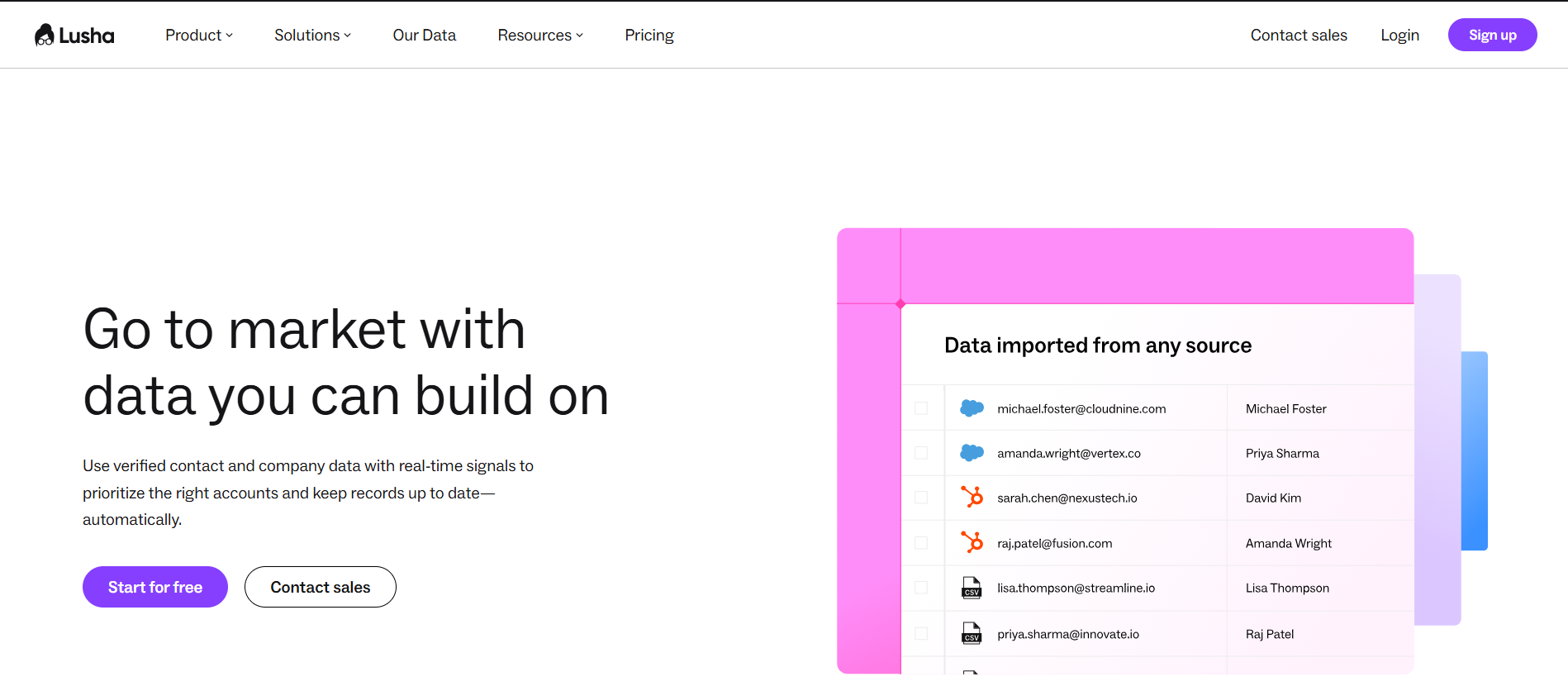
Lusha is a B2B data and sales-intelligence platform for finding contacts, enriching records and identifying buying signals. Its current data page publishes more than 290 million contacts and 29 million companies, along with verified business email, phone and company data.
Key Strengths
- Large published contact and company coverage
- Contact and company enrichment
- Buying signals
- CRM and API connectivity
- Prospecting workflows for revenue teams
Best Use Case
Lusha can fit teams that need fast contact lookup and enrichment across a broad international market, particularly when prospecting and CRM enrichment need to work together.
Buyer Check
Coverage and accuracy vary by data field and region. Test the roles, countries, email fields and phone fields most important to your ICP instead of relying solely on a global number.
2. UpLead
Best for: Accuracy-focused prospect list building
UpLead focuses on B2B contact and company data with real-time email verification at download. Its current data documentation publishes more than 200 million B2B contacts, 19 million company profiles and a 95% accuracy guarantee. It also offers technology data and enrichment capabilities.

Key Strengths
- Real-time email verification
- Extensive B2B contact coverage
- Company profiles
- Technographic filtering
- CRM and workflow integrations
Best Use Case
UpLead is a useful option for teams building targeted email lists where verification at the point of export is important.
Buyer Check
Coverage still varies by niche, geography and data field. Test the exact contact types and phone/email mix you require, and check current pricing rather than embedding a plan price that may become outdated.
3. SalesIntel
Best for: Human-verified data, technographics and intent-led targeting
SalesIntel combines AI-assisted data collection with human verification. Its current data pages publish more than 200 million B2B contacts, firmographic coverage across more than 30 million companies, 42,000+ tracked technologies and 95% contact-data accuracy. The company says contacts are refreshed on a rolling 90-day cycle.

Key Strengths
- AI plus human-verified contact data
- Rolling verification
- Technographic information
- Intent and signal filtering
- CRM enrichment
- Exports into sales-engagement workflows
Best Use Case
SalesIntel is suited to mid-market and enterprise teams that want contact data, account intelligence and technographics layered into an account-based or signal-driven prospecting process.
Buyer Check
Validate depth in your specific international markets and confirm which data, enrichment, intent and usage features are included in the plan you are evaluating.
4. Lead411
Best for: Growth-event and signal-based prospecting
Lead411 combines B2B contact data with signals such as hiring, funding and executive changes. Its current product pages emphasise triple-verified email addresses, double-verified direct dials, CRM enrichment and growth-intent data.

Key Strengths
- ·Triple-verified email positioning
- Double-verified direct-dial positioning
- Growth-event signals
- Lead scoring
- CRM enrichment
- API and integration options
Best Use Case
Lead411 fits teams that want to prioritise accounts around meaningful company events rather than processing a static list in arbitrary order.
Buyer Check
Confirm coverage for your ICP, the signal sources included in your plan and whether the available outreach functionality is deep enough for your sales process or should feed a separate engagement platform.
5. RocketReach
Best for: Broad professional contact discovery
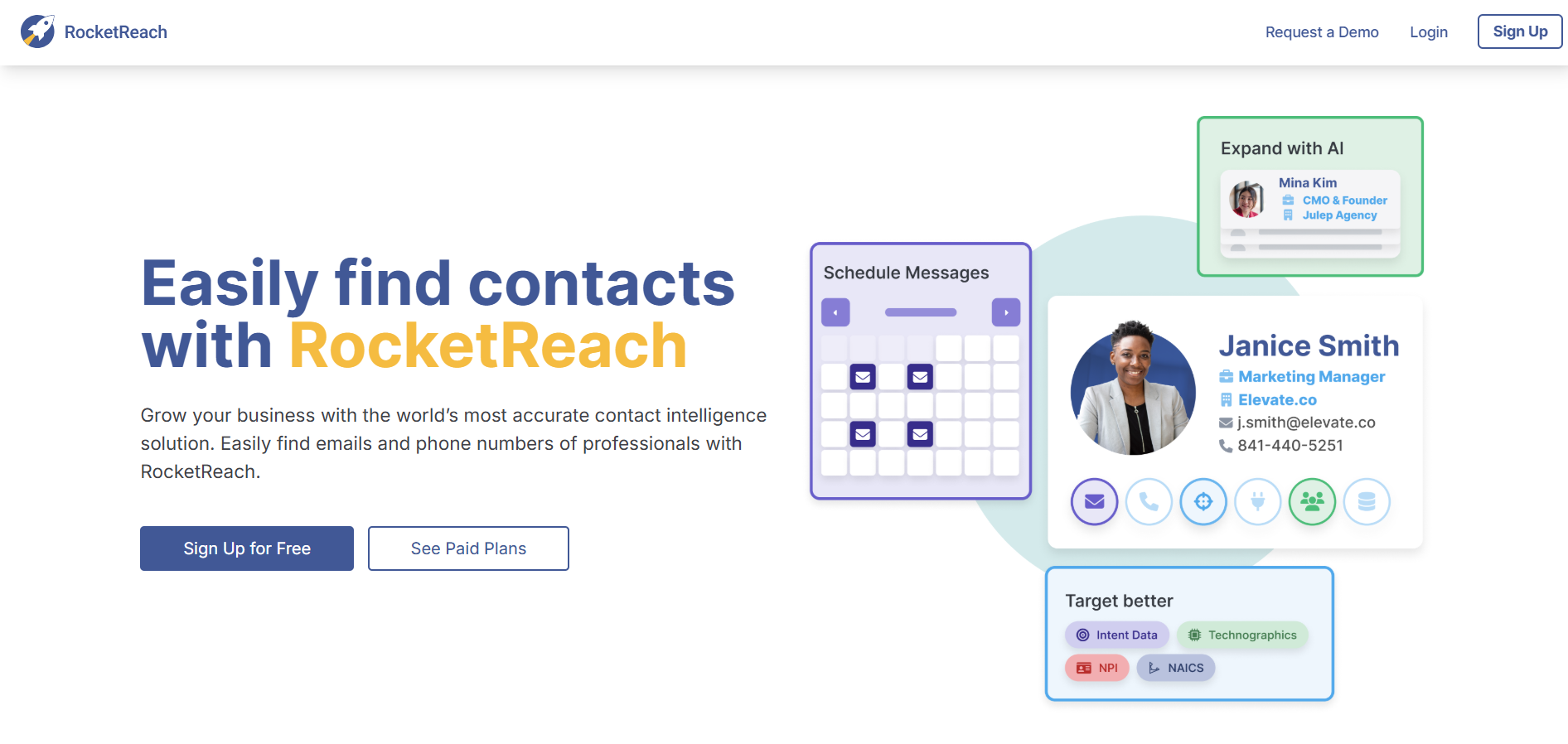
RocketReach is a contact-intelligence platform designed for individual lookup, bulk prospecting, enrichment and integration workflows across a broad range of roles and industries.
Key Strengths
- Broad professional contact coverage
- Email and phone discovery
- Bulk lookup
- Browser-based prospecting
- Integrations
- API options
Best Use Case
RocketReach can suit teams prospecting across several industries or geographies where broad professional coverage is more important than a highly specialised vertical dataset.
Buyer Check
Check the current plan for the contact fields, export limits, phone access and any sequencing or workflow functionality you require. Avoid publishing a fixed database-size or pricing figure unless it is tied to a current first-party source.
6. Seamless
Best for: High-volume prospect research
Seamless.AI positions itself around real-time prospecting and contact search. Its current feature pages publish more than 1.3 billion business contacts researched, more than 1.6 billion B2B email addresses and more than 100 search filters.
Key Strengths
- Large vendor-published contact universe
- Extensive search filtering
- Email finding
- Phone finding
- Prospecting automation
- Browser-based workflows
Best Use Case
Seamless.AI is most relevant to teams that need to build and research larger prospect lists and want prospecting automation alongside contact discovery.
Buyer Check
Do not rely on anonymous or unsourced bounce-rate claims. Run your own representative sample and compare the data quality in your highest-value segments with your team's deliverability requirements.
7. SMARTe
Best for: Global and mobile-focused B2B prospecting
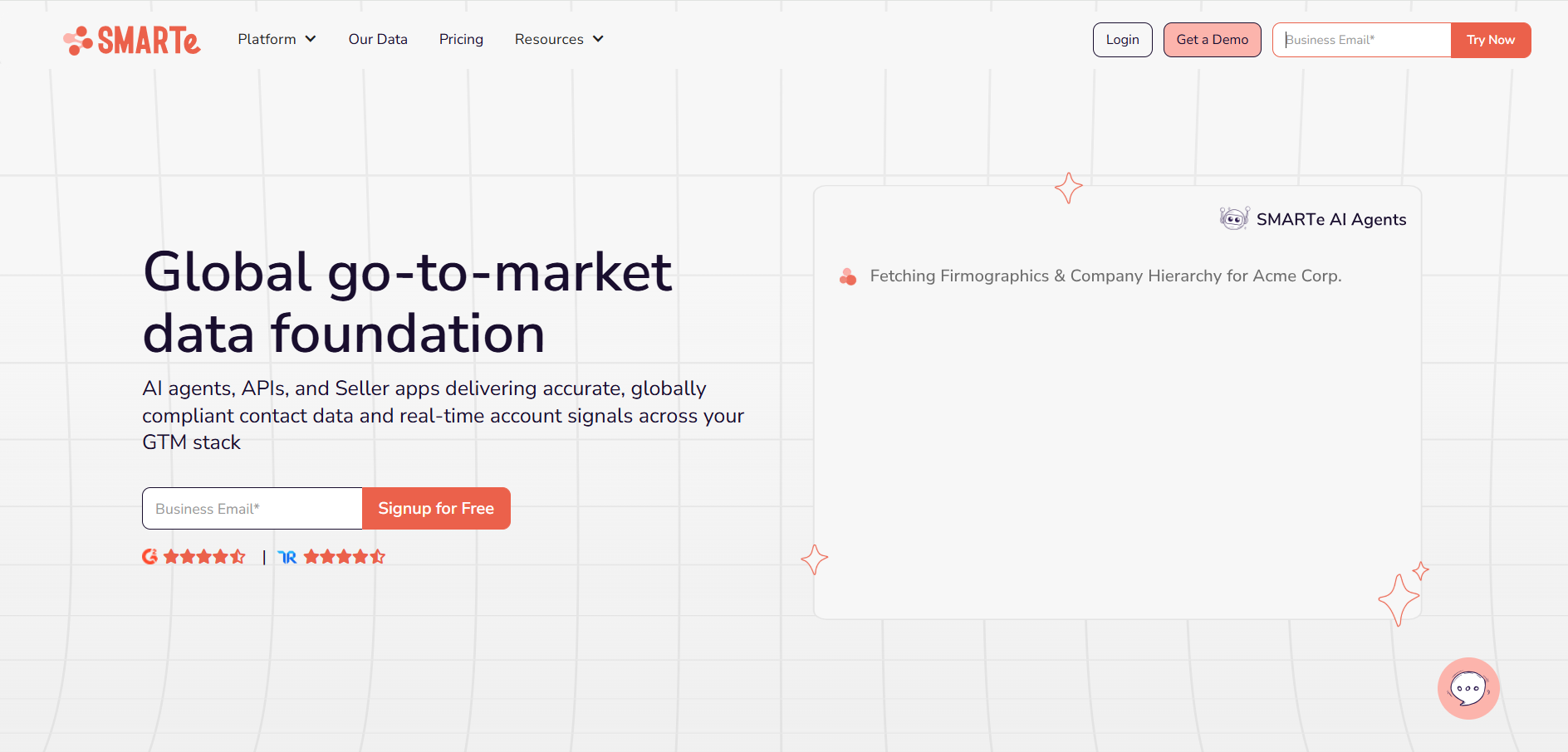
SMARTe focuses on global B2B data with particular emphasis on mobile coverage. Its current data page publishes more than 289 million B2B contacts, 66 million company profiles, 75% mobile coverage in North America and 50% globally.
Key Strengths
- Broad international contact coverage
- Company data
- Strong vendor-published mobile coverage
- Technographic information
- Job change and buying signals
- CRM and enrichment workflows
Best Use Case
SMARTe can be particularly relevant to revenue teams targeting several regions and needing mobile or direct-number coverage alongside company information.
Buyer Check
Sample the specific countries, seniority levels and industries you target. Confirm the fields and credits required for your expected enrichment volume before comparing total cost.
8. ContactOut
Best for: LinkedIn-first prospecting and recruiting workflows
ContactOut combines a search portal, Chrome extension, saved profiles, data enrichment and email campaigns. Its extension works with LinkedIn and GitHub, allowing users to find available email or phone information while reviewing profiles and then move those contacts into downstream workflows.

Key Strengths
- LinkedIn and GitHub browser extension
- Contact discovery close to profile research
- Profile saving and organisation
- Bulk enrichment
- Email campaign functionality
- Export and integration options
Best Use Case
ContactOut fits teams whose prospecting begins heavily on LinkedIn and who want contact discovery to remain close to profile research.
Buyer Check
Confirm current credit allowances, the mix of business and personal contact data available in your target market and whether its email-campaign capabilities are sufficient for your sequencing and reply-management requirements.
9. ListKit
Best for: Teams that want B2B data and cold-email infrastructure together
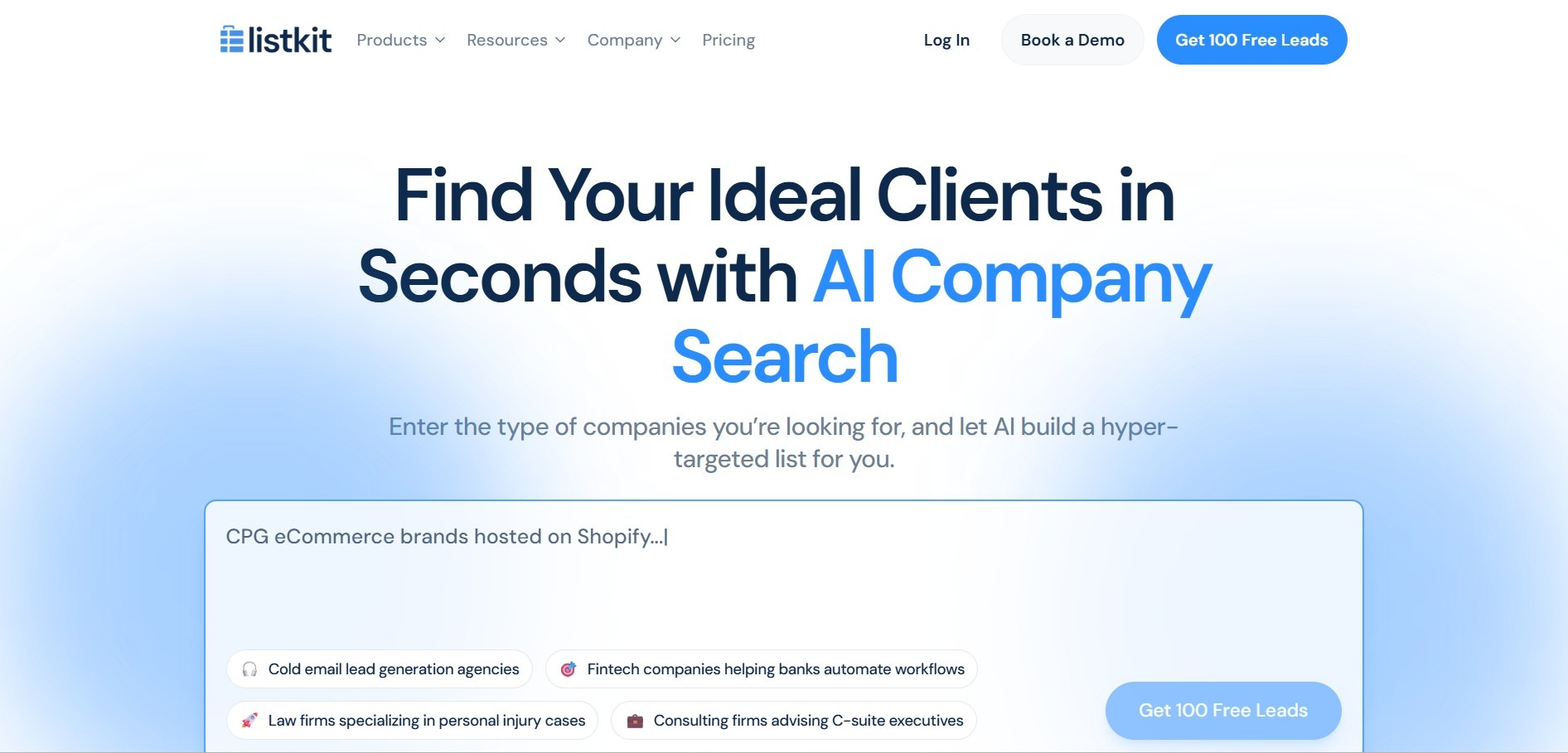
ListKit now positions itself as an all-in-one cold-email platform rather than simply a B2B data provider. Its current product materials describe a B2B database with AI search and triple verification alongside domains, inboxes, warm-up, sequence creation and email sending. The vendor currently publishes more than 977 million B2B contacts.
Key Strengths
- Large vendor-published B2B database
- AI-based prospect search
- Triple-verification workflow
- Email verification
- Cold-email domains and inboxes
- Warm-up infrastructure
- Email sequences and sending
Best Use Case
ListKit is relevant to teams that want prospect data and cold-email execution inside the same operating system instead of purchasing a database and sender separately.
Buyer Check
Because ListKit overlaps data and engagement, compare the full workflow and total cost against the separate data-plus-outreach stack you would otherwise use. It should no longer be described as a data-only provider with no sequencing capability.
B2B Data Providers Comparison at a Glance
Salesflow helps teams automate outreach, manage replies, and scale outbound campaigns.
Picking the Right Data Provider for You
The right B2B data provider is the one that performs well on your market, your required fields and the workflow that follows the lookup.
Start by creating a representative sample of your actual ICP. Measure how many records are usable, how many required fields are present and how the provider verifies the fields that matter most to your team.
Then test the hand-off. Does the data move cleanly into the CRM? Does it create duplicates? Can ownership and campaign status remain consistent? Can your reps understand where the record came from?
Do not buy on database size alone. A smaller usable dataset in the exact geography and role you need can be more valuable than a huge headline number with weak coverage in your segment.
Also check for stack overlap. Some providers now include email campaigns, AI drafting, domains, inboxes or prospecting automation. Others remain more focused on data and enrichment.
Once the list is verified, Salesflow can coordinate LinkedIn and email outreach, reply handling and campaign reporting. Use the data provider for the job it does best, then keep campaign execution and conversation history in a workflow your team can operate consistently.
.svg)