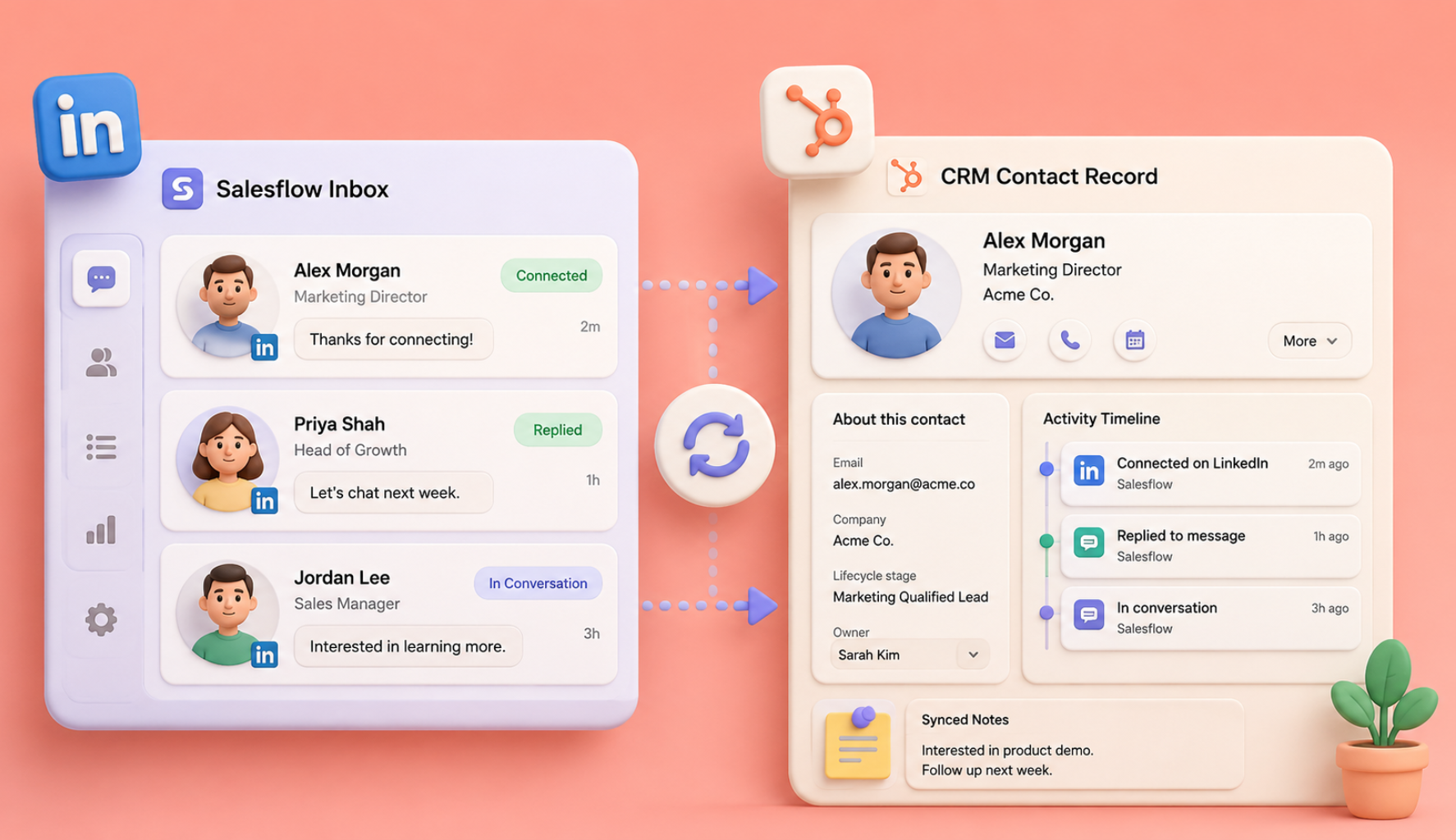
Search for the best AI SDR, and you will get a ranked list written by someone who sells one of them. The order changes depending on whose blog you land on, which tells you what the ranking is worth.
The harder problem is that the category does not describe one kind of product. Two tools can both call themselves an AI SDR when one writes email copy from a prompt and the other finds the prospect, verifies the phone number, runs the sequence across three channels, reads the reply, and puts a meeting on your calendar. Same label, different job, and a substantial price difference.
So this guide goes beyond a simple ranking. It sets out the five product types you will run into, gives you a scorecard weighted two ways, once for an agency selling outreach to clients and once for a startup running its own pipeline, and covers the questions that decide whether a tool survives month three. If you want a shortlist with names on it, our top 10 multichannel outreach tools guide does that job.
Quick answer: The best AI SDR tools in 2026 are not interchangeable. Agencies should prioritise client separation, white labelling, sender safety and predictable cost per client, while startups should prioritise quick setup, approval controls, clean data and predictable monthly spend. Use the scorecard below to compare candidates against the job they actually need to do.
What people mean when they say AI SDR
The phrase arrived faster than the products did. In 2023, it usually meant a writing assistant. By 2026 a handful of platforms can run a whole outbound motion with a human approving the work, and everything in between is still on the market at similar prices.
Five patterns cover almost all of it.
Most buyers think they are comparing options inside one row and are quietly comparing across four. Pick your row first. The choice inside it is much easier.
One more distinction that matters more than any feature list. Some products draft and wait for a human, some send on their own. Both can be the right answer. A three person startup where the founder's name is on every email needs a review step. A lead gen agency running two hundred campaigns cannot review every message and needs automation with tight rules and an audit trail. Decide which you are before the demos, because it is the one setting that shapes everything else.
The scorecard, weighted two ways
Score each candidate out of five during a trial or a demo, multiply by the weight for your situation, then add it up. The exercise takes half an hour, and it beats a gut feeling formed on a demo high.
Two rows do most of the work. Cost per booked meeting is the only number that survives contact with a finance conversation, and you can only get it by running a real campaign, so guard your trial time. Use a return on investment calculator to sanity check the model before you start.
Cost predictability is the row people discover too late. Consumption pricing is fair, and it is also how a tool that looked like a few hundred a month turns into four figures in a heavy prospecting week. Ask for the metering rules in writing before you sign.
What agencies should look for
An agency buys a different product from an in-house team, even when the logo on the login page is the same.
Start with client isolation, because it is the thing you cannot retrofit. Every client needs a workspace of their own, with their own inboxes, suppression lists, and data, and you need one view across all of them so a campaign that stalled on Tuesday does not go unnoticed until the Friday report. Role based permissions matter as much: an account manager and a client contact should not see the same screens. Salesflow's agency setup was built around exactly this, with a global dashboard, assigned accounts and permission levels for managers and users.
Then white label, and be specific in the demo. Ask whether it covers the logo, the colour palette, the browser tab, your terms, and the client's inbox view, or only the logo in one corner. An AI SDR you can resell under your own brand is a service line. One you cannot is a tool your client will find and buy directly.
Sender reputation is your inventory. When you run outbound for thirty clients, one careless campaign harms more than that one relationship. It teaches your sending infrastructure a bad habit. What you want to see is a sending spread across a pool of inboxes with per inbox daily limits, gentle ramping for new mailboxes, bounces turned into permanent suppressions without anyone deciding to do it, and one click unsubscribe in every email. For the LinkedIn side, ask how logins are handled. Salesflow gives each account a consistent IP through a session browser so client profiles are not accessed from wherever your team happens to be that day.
Now the margin question, which is where the AI part either pays for itself or does not. Work out three numbers for each candidate: your monthly cost per client, the hours your team still spends per client per week, and the meetings delivered. AI that removes list building and first draft writing but leaves reply handling manual will not change your margin much, because replies are where the hours go. AI that triages replies, drafts responses, and tells your operator which twelve conversations need a human today changes the number of clients one person can carry, and that is the only lever that moves agency economics.
Ask about pricing at your scale too. Wholesale rates for resellers exist in this market, and if a vendor cannot describe how the cost per client falls as you add clients, you are being priced as an end customer while doing the work of a channel partner. Our agency case studies show what that looks like once the model works, including one agency running a fifty client referral engine.
What startups should look for
At a startup, the constraints flip. There is no ops person, the LinkedIn account being automated usually belongs to a founder, and money spent this month is money that was going to be spent on something else.
Time to first campaign is the top criterion, and it is easy to test: can you get a list, a sequence and a first approved send done in one afternoon, without an onboarding call? Tools that need a consultant to configure them are priced for a company with a sales ops team.
The approval layer matters more here than anywhere else. In a ten person company, an email sent in the founder's name is the brand. You want to see every message before it goes, at least for the first month, and then decide what to hand over. A product that only runs fully autonomously is asking you to bet your reputation on its judgement before you have any reason to trust it.
Data quality beats data volume. A million contacts you cannot verify is worse than two hundred you can, because bounces damage the sending domain you will be using for the next three years. Look for verification that happens before sending rather than a report afterwards, and for enrichment that tries several sources so your list does not thin out to nothing on the first pass.
Be careful with volume promises. LinkedIn applies invitation limits that can vary by account activity and other factors, so treat any pitch built around unusually high weekly connection volumes with caution. Email is what raises the ceiling, and running both channels in one sequence is what stops your follow up living in a spreadsheet. The startups and SMB page covers how smaller teams tend to set that up.
Last, price the exit before you buy. Ask what happens to your data, your sequences and your suppression list if you leave, and whether the plan can be paid monthly while you find out if the channel works. A discount for an annual commitment is worth taking in month four, once meetings are landing. In month one, it is a cash flow risk dressed as a saving.
The five questions that separate a real AI SDR from a demo
Every vendor will say yes to the feature list. These are harder to fake.
1. What does it do when nobody is logged in? Ask for a specific answer. Which steps run unattended, which wait for a human, and how do I change that per campaign?
2. Show me the reasoning. A serious product shows each search, each enrichment call, and each draft as it happens, and cites where a personalised line came from. If the output arrives with no trail, you cannot audit it, and neither can your client.
3. What happens on reply? Watch a real reply arrive during the demo. It should stop the sequence immediately, get classified, and land in one inbox with the rest of that person's history, whatever channel it came from.
4. How does it treat an unsubscribe? The answer should be permanent and global, across every campaign and every workspace, with no way for that contact to re-enter a list later.
5. What does a month cost at my volume? Make them price your actual plan: this many contacts worked, this many mailboxes, this many calls. If the answer needs a spreadsheet nobody will show you, the bill will surprise you.
If you get five straight answers, you are talking to a product. If you get three answers and two deflections, you are watching a roadmap.
A two week evaluation that produces a decision
Trials get burned on interface tourism. Structure it instead.
Days one to three. Connect one inbox and one LinkedIn account, and build a single narrow list, no more than two hundred people in one segment with one offer. Time the setup and count how often you needed support. That is your onboarding cost, and for an agency it is also your cost per new client.
Days four to seven. Launch with review on, and read every message before it sends. You are grading the research, not the grammar. Does the personalised line reference something real and checkable? Roughly how many drafts did you edit? Above a third, and the AI is generating work rather than removing it.
Days eight to eleven. Add the second channel and let replies come in. This is the part most tools fail. Check that sequences stop on reply, that classification is right often enough to trust, and that the shared inbox is somewhere you would happily spend an hour a day.
Days twelve to fourteen. Count the meetings that came out of it and work out what each one cost you, then hold that figure against what one new customer is worth. Agencies run the same maths per client and add the hours your operator spent. Then, only then, turn autonomy up on one campaign and see whether the quality holds without you.
Run this on the account and volumes you intend to use in production. A trial at ten touches a day proves nothing about deliverability at two hundred.
How pricing works in this category
Three models are in circulation, and comparing them like for like is most of the work.
Per seat is the familiar one, and it suits teams where each rep has their own pipeline. Watch for tools where the price per seat never falls, since every hire then raises your software bill in a straight line.
Consumption pricing, usually credits, charges for the work performed: a contact found and verified, an enrichment, a minute of AI calling. Done well it is the fairest model in outbound, because you pay for output rather than logins, and a small team using the product hard is not subsidising a big team barely using it. Done badly, it is unforecastable. Two questions fix that. What exactly consumes a credit, and can I set a monthly ceiling with a warning before it is reached?
Per meeting looks like the safest option and is usually the most expensive per unit. It also puts the vendor in charge of what counts as a meeting, so read that definition slowly.
For a hybrid of a seat fee and a credit pool, which is where much of the market is heading, ask for a worked example at your volume. Take your real numbers, a monthly contact target, mailbox count, and call minutes, and have the vendor show you what the bill is. Then ask what happens when you go over. A hard stop with a warning is a feature. Silent overage billing is not.
Where Salesflow's AI SDR fits
Ariel is Salesflow's AI SDR, built on the outreach platform 10,000+ users already run, and it sits in the fourth row of the table above with the approval layer switched on by default. Full detail lives on the Ariel page, so here is only what maps to the criteria in this guide.
It covers the whole motion rather than one slice of it. You describe your market in plain English and Ariel searches for matching people and companies, runs lookalikes off your best customers, and reruns saved LinkedIn searches on a schedule. Intent Radar adds a weekly feed of funding rounds, hiring spikes, job changes, and website visits scored against your ICP. Contacts are enriched through several data providers in sequence, so a miss on the first source gets a second and third attempt, and every email is verified before it can enter a campaign.
Outreach runs as one sequence across email, LinkedIn, and AI phone calls, inside sending windows in the prospect's timezone and daily limits you set per inbox. Sending is spread across a pool of inboxes with warm up aware pacing, bounces become suppressions automatically, unsubscribes are permanent, and every email carries one click unsubscribe. If a contact is skipped, the campaign says why instead of failing quietly.
Replies land in one inbox, threaded per person across channels and classified on arrival as interested, meeting request, not now, out of office or unsubscribe, with assignment so nothing sits unowned. Focus Mode is the approval layer: every draft queues for review, you approve or skip one card at a time, and autonomy is something you grant rather than the default. Each personalised line is cited to the research it came from.
For the two audiences in this article, the fit is different. Agencies get the multi account layer from the wider platform, with private workspaces per client, a global dashboard, role based permissions, white label branding and a session browser for safe client logins. Startups get the part that matters when nobody has spare hours: same day setup through inbox connection over OAuth, a first list built from a description of your market, and a first campaign live once you have approved it.
Two honest notes. Ariel is sold through a demo rather than self serve signup, because most teams want to see it work on their own market before committing. And no platform can promise a social account will never face restrictions. What good tooling does is keep volumes sane, keep data clean, and keep a human in the loop, which is the version of that promise worth believing.
Where that leaves you
There is no single best AI SDR for every team, only the best fit for what you sell and who runs it. Agencies should buy for client separation, branding, and the hours per client that the tool removes. Startups should buy for speed to the first campaign, control over what goes out in their name, and data clean enough to protect a domain they will use for years.
Pick the row in the table that matches the job, score three candidates against the weighted criteria, run one properly structured two-week trial, and count meetings. If you want to see the approach in this article running on your own market, book a demo and watch Ariel build the list, draft the outreach, and queue it for your approval, live.
.svg)
.png)