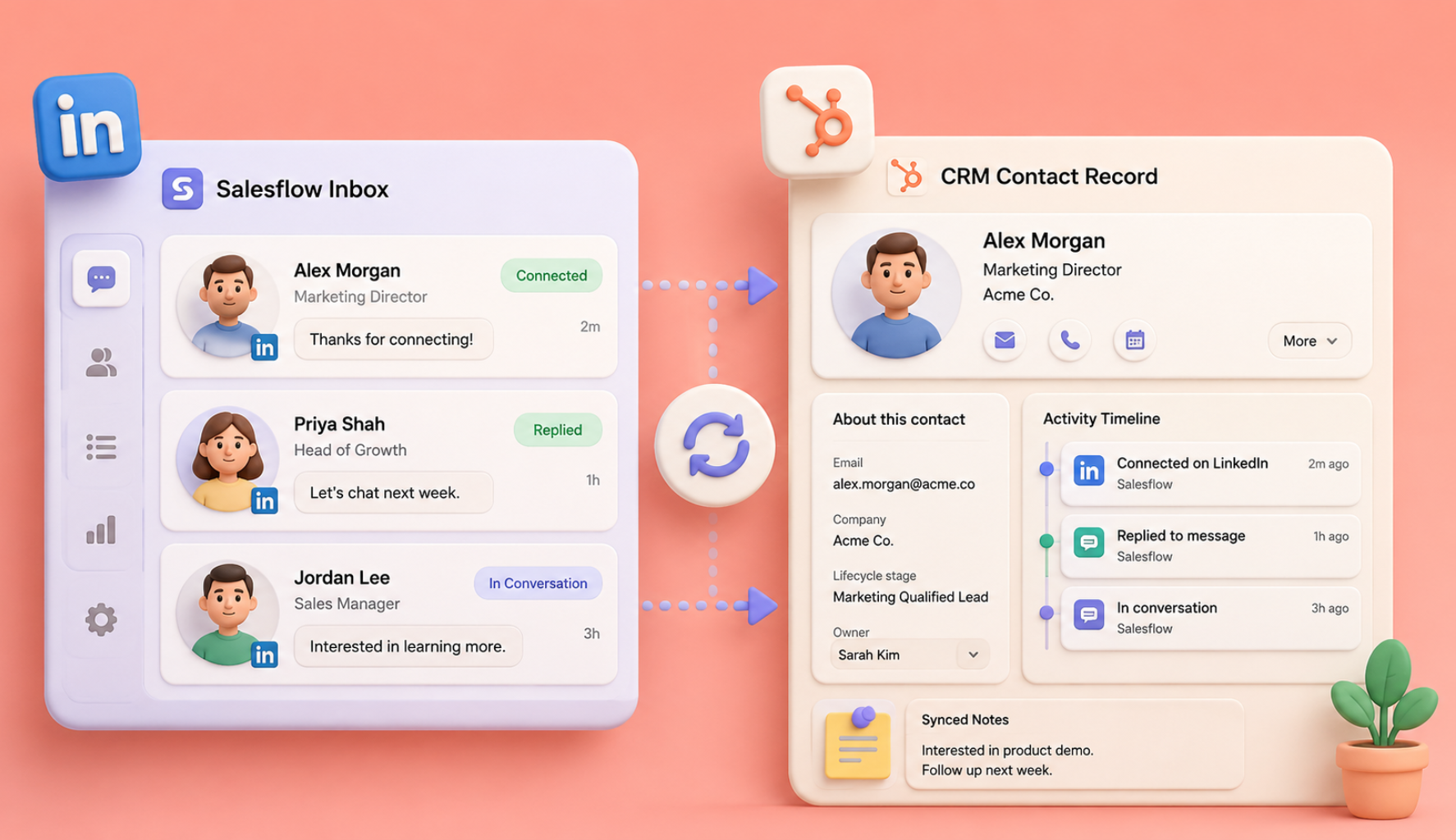
Prefer listening?
Hear the audio version of this article here:
SaaS founders can build a pipeline without an SDR by doing the discovery work first: narrow the ICP, build a small high-fit list, coordinate LinkedIn and email, test founder-level messaging, and document the sequence that produces qualified conversations. Hire an SDR after the process is repeatable, not as a substitute for finding the process.
That sequence turns founder-led selling into a learning loop rather than a permanent job. For a broader operating model, see the complete outbound guide for SaaS companies.
Why founder-led outbound works before the handoff
A founder has context a new SDR does not yet have: direct knowledge of the product, the reasons customers buy, the objections that recur, and the tradeoffs behind the roadmap. Early outreach converts those conversations into market feedback while the sales motion is still being defined.
This does not mean every founder should spend all day prospecting. It means the founder should own enough early conversations to identify which accounts convert, which triggers create urgency, what language prospects use, and what a future rep can follow without improvising the entire process.
Step 1: lock down the ICP before sending anything
A pipeline problem often starts as a targeting problem. "Mid-market companies with a sales team" is a market, not a usable outbound segment. A founder-led ICP needs to be narrow enough that the first sentence can refer to a specific company situation without sounding copied.
- Industry or vertical where the problem is acute.
- Company stage or size, such as funding stage or employee range.
- The trigger that makes the problem urgent now, not someday.
- The person who feels the pain and the person who controls the budget.
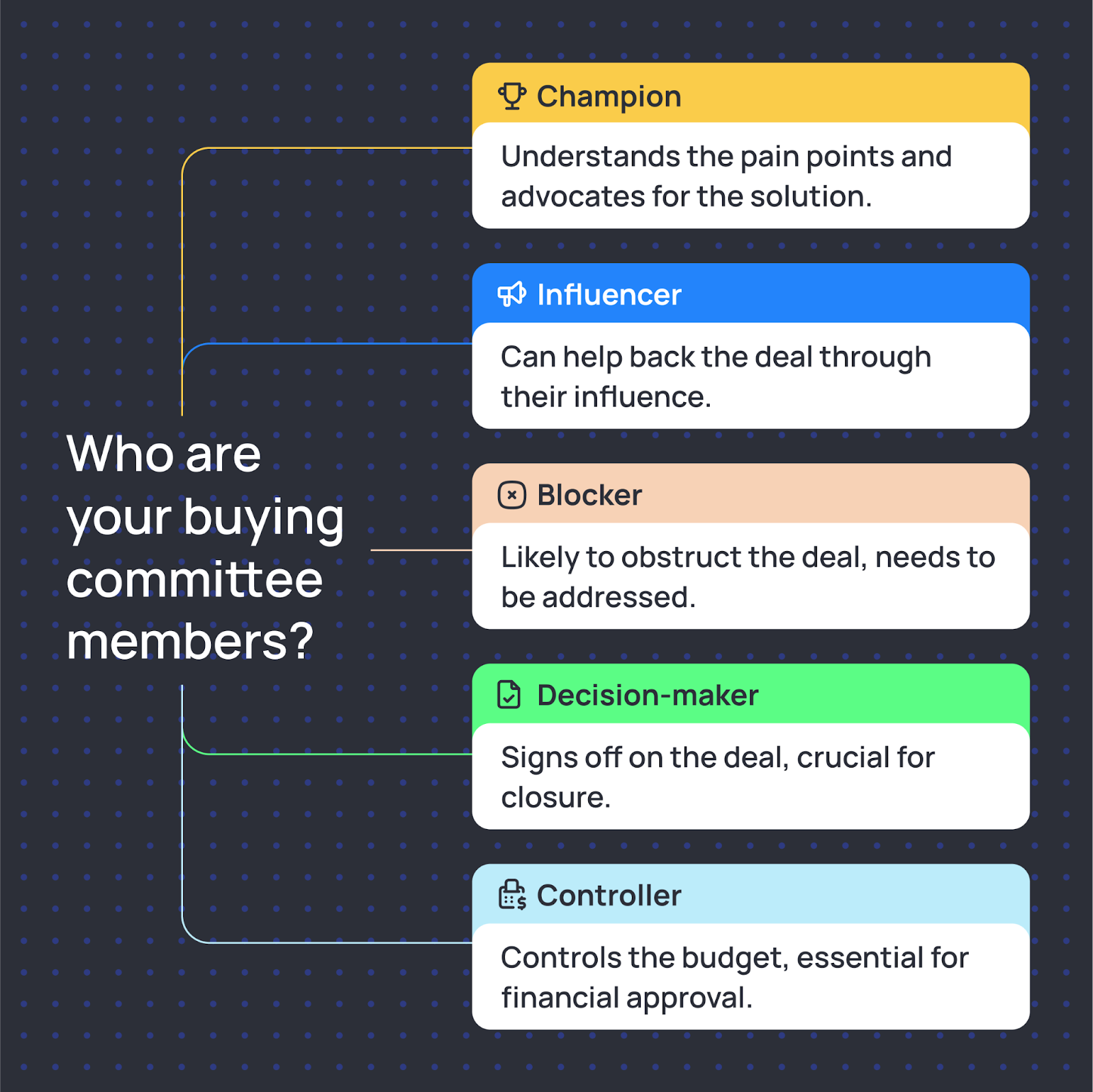
For higher-ACV sales, map the buying committee instead of relying on one contact. A champion without authority can stall, while an executive without internal support can dismiss the project before anyone builds a case.
Use trigger events to sharpen timing. Funding, a senior sales hire, a new market launch, headcount growth, or a public post about the problem can separate an account that fits on paper from one that has a reason to act now.
Step 2: build a contact list worth contacting
Start with a small list you can inspect. A few hundred accounts that match the same problem and buying moment produce cleaner tests than a broad export where every contact needs a different explanation.
Use LinkedIn Sales Navigator to filter by role, company, geography, and relevant account signals. Use a verified data source for business email addresses, then add one short research note that explains why each account is timely.
That note can be a funding event, a new VP of Sales, a role the company is hiring for, a product launch, or a prospect statement that reveals the problem. The purpose is not to write a miniature biography. It is to give the first message a factual reason to exist.
Step 3: coordinate LinkedIn and email
At this stage, LinkedIn and email give founders two useful surfaces: LinkedIn can establish identity and context, while email gives more room for a concrete business case and a calendar link. The channels work best when they share one prospect state instead of running as unrelated campaigns.
A multichannel outreach platform can coordinate those steps, pause after a reply, and route contacts according to whether they connected or whether an email address is available. If you are comparing outbound sales automation software, test the workflow logic before comparing dashboard screenshots.
Where LinkedIn connection request automation fits
LinkedIn connection request automation can remove repetitive sending and follow-up work, but it does not remove LinkedIn policy risk or the need for relevant targeting. Keep a human owner on audience quality, message review, replies, and opt-outs. LinkedIn says unauthorized software that automates activity can violate its User Agreement, so review the policy before connecting any third-party tool.
For conditional LinkedIn-plus-email paths, see the Dynamic Outreach workflow guide. For email, follow Google's sender guidelines on authentication and sending practices.
Step 4: Write outreach at founder level
The founder advantage is context, so the message should use it. Open with a specific trigger, connect that trigger to a business problem you understand, then make a small ask. The message does not need a product tour or a long credential block.
Example founder email
Subject: New VP Sales + pipeline coverage
Saw the VP Sales role you posted after the Series A. Teams at that point often need a repeatable outbound motion before the new leader has to build one from scratch.
We help early-stage SaaS teams coordinate LinkedIn and email so the founder can hand off a tested sequence instead of a blank playbook.
Open to a 20-minute comparison of what you are running today?
Example connection note
Saw that your sales team is growing after the recent round. I work with SaaS founders building the first repeatable outbound motion. Happy to connect.
After the connection, ask a question that is easy to answer and relevant to the trigger. For example: is pipeline creation still founder-led, or has the team already assigned an outbound owner? That opens a conversation without forcing a demo request into the first touch.
Use a planned follow-up sequence
One message is too little data to judge the channel, the list, or the offer. Use a short multi-touch cadence, add new context at each step, and stop immediately after a reply or opt-out.
If you need more message structures, use the Salesflow guide to LinkedIn and email sequences as a starting bank, then rewrite each example for the trigger and audience.
Executing a 5-step sequence manually across 150 contacts is where founder-led outbound falls apart. Salesflow automates the coordination so the sequence runs while the founder stays focused on closing. Start a 7-day free trial here.
Step 5: Measure the signal, then adjust one variable
Track connection acceptance, email replies, positive replies, meetings, and meeting-to-opportunity or close rate. Your own baseline matters more than a generic benchmark because list quality, market, offer, sender reputation, and deal size change the expected numbers.
Use the pattern to diagnose the next test. If LinkedIn acceptance is stable but email replies lag, review the email hook and offer. If replies look healthy but meetings do not become qualified opportunities, revisit the ICP and trigger. If every stage is weak, inspect the list before rewriting every message.
Email open rate can be noisy because privacy protections and client preloading affect tracking. Prioritize replies, positive replies, meetings, and downstream opportunity quality.
thy but email replies are low, it's a messaging problem. Rewrite the hook.
If email replies are decent but meetings aren't converting to pipeline, it's a targeting problem. The ICP needs sharpening.
If everything is low across the board, start with the list. Bad targeting poisons every other variable.
Salesflow offers a bunch of detailed analytics through the analytics dashboard, see it in action below:
Document the playbook before hiring an SDR
The valuable output from founder-led outbound is a process another person can execute. Before hiring, document the ICP, trigger events, the strongest message variants, sequence timing, common objections, qualification rules, and examples of customers that moved fastest.
- One-paragraph ICP definition with disqualifiers and trigger events.
- Two or three message variants that have produced qualified replies.
- The sequence, channel order, timing, and stop rules.
- Objections that recur and the responses or proof points that resolve them.
- Examples of high-fit customers and the reason each one bought.
That document turns the first SDR role into an execution job rather than another discovery experiment. The handoff is ready when the team can explain who to contact, why now, what to say, what to measure, and what a qualified conversation looks like.
Common mistakes founders make with outbound
Treating outbound as separate from product learning. Early sales conversations reveal how prospects describe the problem, what they compare you with, and which objections matter enough to change positioning.
Outsourcing before the founder has heard enough objections. A contractor can run a process, but cannot manufacture the product context and customer language that the founder has not yet documented.
Chasing volume before targeting is stable. More sends create more noise when the segment or trigger is wrong. Increase volume only after the same message can be tested against a coherent audience.
Stopping after one touch or sending empty "bump" follow-ups. A follow-up earns its place when it adds a different reason to respond, such as a relevant customer example, new trigger, question, or proof point.
Measuring opens as the main success metric. Optimize for qualified replies and meetings, then check whether those meetings turn into opportunities.
When to bring in an SDR
Use process readiness rather than a universal ARR threshold. The strongest signals are a documented ICP, at least one sequence that repeatedly creates qualified conversations, known objections, clear qualification rules, and enough closed or advanced deals to explain why buyers move.
A practical operating test is simple: could a new rep follow the written process for several weeks without asking the founder to reinvent the audience, message, or next step every day? If yes, the founder can start transferring execution while staying close enough to update the playbook.
If the process is still changing every week, keep the learning loop small. Use Salesflow to coordinate the repetitive steps, then use the time saved for replies, discovery calls, and message review. Compare Salesflow features or the B2B startup outbound plan before expanding the motion.
.svg)


.png)